Table of Contents
ToggleThe Story of “GlobeTrans Logistics” — From Chaos to Clarity
A decade ago, Rajesh managed a mid-sized logistics firm that relied heavily on paperwork, phone calls, and manual tracking. Every shipment meant piles of documents, endless follow-ups, and long waiting hours at checkpoints. When a truck got delayed, Rajesh could only guess where it was — often depending on a driver’s word or a paper logbook. Communication gaps led to missed deadlines, frustrated customers, and rising costs.
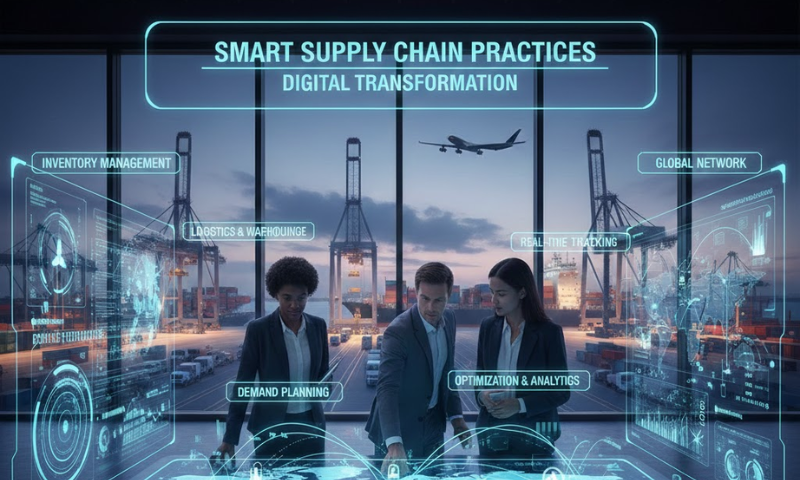
But things began to change when Rajesh’s company decided to embrace digital transformation. They started by installing IoT sensors in their trucks to track real-time locations. AI-driven software began predicting delivery times more accurately than ever before. When they adopted blockchain, every transaction — from supplier to customer — became transparent and tamper-proof. Meanwhile, automated warehouses powered by robotics ensured faster, error-free sorting and packaging.
Today, Rajesh’s team doesn’t shuffle through paperwork or wait for updates — they can see the entire supply chain live on a dashboard. A shipment delay in Chennai triggers an instant alert and an AI-generated alternate route. Data flows seamlessly, decisions are data-driven, and customers receive real-time updates with a single click.
What was once a slow, reactive system has evolved into a smart, transparent, and resilient network. Technology is no longer just a support tool for Rajesh’s business — it has become the backbone of his supply chain, redefining the way goods move and people collaborate.
That was before the company decided to embrace digital transformation.
Step 1: Turning Data into Decisions
The company began by introducing an AI-powered supply chain management system. Now, all warehouse and transport data flowed into one platform. Rajesh could track every shipment — from warehouse shelf to customer doorstep — using a single dashboard.
Predictive analytics identified patterns in delays and inventory shortages before they happened. When a particular route in Chennai frequently faced traffic delays, the system automatically suggested an alternative route, saving over 20% in delivery time.
Real-time example:
Similar transformations have been seen at DHL and Maersk, where predictive analytics helps plan smarter routes and avoid costly disruptions.
Step 2: IoT – Giving Life to Logistics
Next, GlobeTrans equipped its trucks with IoT sensors that tracked temperature, fuel levels, and location in real time. For clients shipping perishable goods like dairy and frozen foods, this was a game-changer. If the temperature inside a truck rose beyond limits, an automatic alert went to the driver and control room.
Customers could also log in to see where their shipments were — no more phone calls, no more guessing. This simple IoT integration reduced product losses by 15% and improved customer trust significantly.
Step 3: Automation and Smart Warehouses
Inside the warehouse, automation took over repetitive tasks. Barcode scanners and robotic arms replaced manual sorting. Inventory was updated automatically, removing errors and saving hours of manual entry.
Rajesh could finally focus on strategy — improving layout efficiency and training his team — rather than firefighting operational chaos.
Inspiration from reality:
Amazon’s fulfillment centers use more than 200,000 robots to optimize inventory management, reducing order processing time from hours to minutes. GlobeTrans mirrored this idea on a smaller scale, transforming operations from reactive to predictive.
Step 4: Blockchain for Transparency
GlobeTrans partnered with its key suppliers to implement a blockchain-based documentation system. Invoices, customs forms, and delivery receipts were all digitally stored and verified across the chain.
This eliminated tampering, reduced fraud risk, and built trust across stakeholders. Now, every shipment carried a verified digital record from source to destination — reducing paperwork and disputes by 30%.
Step 5: The Human Side of Digital
While technology transformed operations, people remained the heart of change. Rajesh trained his team to use the new digital tools and encouraged them to share insights.
Within months, productivity improved — not because of machines alone, but because people and technology worked together. Employees who once resisted change now took pride in showing clients real-time dashboards and data-driven reports.
The Result: A Smarter, Stronger Supply Chain
Today, GlobeTrans Logistics is a model for smart supply chain practices.
- Inventory accuracy: 98%
- On-time delivery rate: 96%
- Customer satisfaction: Up by 40%
Rajesh’s once chaotic mornings are now calm and controlled. With a single tap, he can see where every product is, predict bottlenecks, and make informed decisions.
What was once a paper-heavy, delay-prone operation has become a digital ecosystem — fast, transparent, and intelligent.
The Takeaway
Digital transformation isn’t about replacing people with technology — it’s about empowering them with better tools and insights. From IoT to AI, automation to blockchain, the future of supply chain lies in real-time intelligence and collaboration.
Companies like GlobeTrans show that even mid-sized businesses can lead this revolution. In today’s dynamic world, being smart isn’t optional — it’s survival.