
Table of Contents
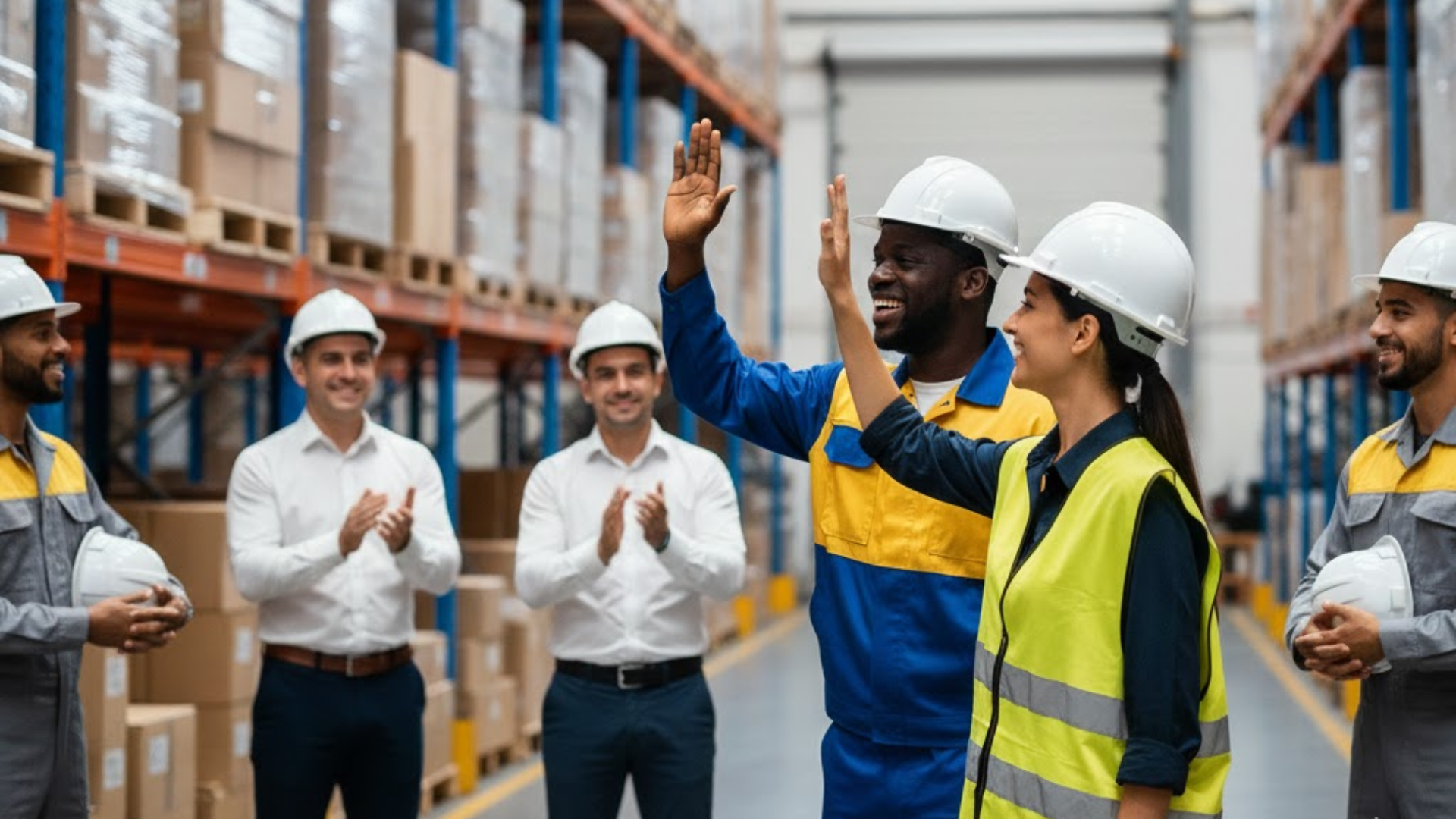
ToggleCollaborative teams can achieve higher productivity because teamwork fosters innovation as workers pool ideas. Strong teamwork minimizes misunderstandings, leading to fewer mistakes and faster progress in work. It boosts efficiency, reduces errors, enhances safety, and improves overall productivity through coordinated efforts among staff.
In a warehouse, every task is connected. From receiving goods to storing, picking, packing, and dispatching, each step relies on the previous one. Team support reduces absenteeism and turnover, while recognition builds morale, making workers more committed and adaptable to peak demands or disruptions. In short, teamwork keeps the entire supply chain strong and reliable.
Warehouses are high-pressure environments where speed, accuracy, and safety all need to function together. Even if one team or department faces a delay, it can affect multiple operations at once. For example, if receiving gets delayed, storage and put-away slow down. If storage is not done properly, pickers may struggle to locate products, which impacts packing and dispatch timelines. This is why teamwork is not only a “soft skill”—it is a key operational requirement.
Benefits of Teamwork
A coordinated team ensures that daily targets are met without stress or chaos.
- Picking and packing become quicker
- Loading and unloading happens without confusion
- Bottlenecks are reduced
- Cross-checking, task clarity and quality control becomes more efficient
When employees work with coordination and clarity, the daily tasks become smoother. Teamwork helps warehouse staff understand their responsibilities, follow processes properly, and support each other. Instead of working in isolation, teams can plan together and ensure the workflow remains balanced.
For example:
- If the picking team is overloaded, extra support from trained staff can reduce delays.
- If packing is waiting for picked inventory, teams can coordinate priorities to avoid a bottleneck.
- If loading is delayed because of improper packing or missing items, teamwork ensures fast correction and quick movement.
In many warehouses, delays happen not because people are slow, but because of lack of coordination. When workers are aligned, the output improves naturally.
1. Faster Order Fulfilment
Picking, packing, and dispatch are the most time-sensitive warehouse tasks. Teamwork improves speed because workers divide tasks smartly and communicate clearly.
For example:
- Pickers can inform packers in advance about priority orders.
- Packing teams can keep dispatch teams informed about when shipments will be ready.
- Supervisors can balance workloads during rush hours.
This reduces idle time and ensures faster fulfilment.
2. Reduced Errors and Better Accuracy
Warehouse operations demand high accuracy. Small mistakes like wrong SKU picking, quantity errors, or labeling issues can cause customer dissatisfaction, returns, and loss of trust.
Teamwork helps by:
- encouraging cross-checking between teams
- improving task clarity
- ensuring shared accountability for correct dispatch
When teams support each other, errors are spotted faster and corrected before they become costly.
3. Less Confusion During Loading and Unloading
Loading and unloading happen continuously in most warehouses. Without teamwork, this stage can become chaotic due to:
- unclear priorities
- incorrect stacking
- delayed movement of goods
- improper handling
Teamwork ensures that loading/unloading happens smoothly, with correct coordination between forklift operators, helpers, security checks, and supervisors.
4. Fewer Bottlenecks and Smoother Flow
Warehouses rely on smooth movement. When only one section is working efficiently but others are delayed, bottlenecks occur.
Teamwork reduces bottlenecks by:
- coordinating shift handovers properly
- aligning work priorities
- ensuring sections help each other when required
In short, teamwork keeps the warehouse moving like one connected system rather than separate individual tasks.
Teamwork Improves Safety
Warehouses involve heavy machinery, narrow aisles, and constant movement. Teamwork promotes watching out for each other, following safety protocols, and reporting hazards on time.
Safety is one of the most important areas where teamwork has a direct impact. When employees work together, they:
- warn each other about hazards
- follow safety rules consistently
- ensure proper equipment handling
- avoid risky shortcuts caused by pressure to meet targets
For example, forklift operations require clear team communication. One mistake or sudden movement can lead to accidents. Teams who communicate properly reduce chances of injury and damage.
Teamwork also encourages employees to report hazards instead of ignoring them. When workers feel supported, they care more about safety. They know safety is a shared responsibility, not just the supervisor’s job.
Dealing With Challenges Faster
Issues like stock shortages, equipment failures, or urgent orders can be dealt with by coordinating quickly, dividing tasks smartly, and supporting each other during peak loads.
Warehouses face challenges regularly. Sometimes it is a stock issue, sometimes late inbound shipments, and sometimes sudden bulk orders. In such situations, teamwork becomes essential.
For example:
- If stock is missing, the inventory team and picking team can coordinate quickly.
- If a machine stops working, teams can shift tasks to reduce downtime.
- If dispatch has urgent loads, teams can prioritize and complete packing faster.
Teamwork reduces downtime and keeps operations running efficiently.
Better Work Culture and Motivation
Warehouse operations move at a fast pace. When team members communicate well and support each other, motivation improves, stress levels reduce and people enjoy coming to work.
Teamwork directly improves employee experience. Warehouse work can be physically demanding, repetitive, and tiring. Without support, employees feel pressured and disconnected. With teamwork, employees feel valued and supported.
Teamwork helps in:
- reducing stress during peak hours
- building confidence
- improving communication between workers
- encouraging responsibility and trust
When team members feel respected and appreciated, they become more loyal, committed, and motivated.
Continuous Improvement Through Collaboration
Idea sharing, feedback, and collaborative problem-solving creates a culture of continuous improvement and helps in making the warehouses better every day.
Warehouses improve when teams are allowed to share ideas. Many improvements come from ground-level observations—workers can identify where time is wasted or where errors happen.
For example:
- improving aisle layouts for faster picking
- better labeling and storage systems
- rearranging dispatch areas for smoother movement
When employees are involved in problem-solving, they feel ownership and take pride in results.
Strategies for Success
Teamwork in warehouse operations thrives through targeted strategies leading to efficiency gains and cost savings.
1. Clear Communication
Establish clear communication channels, like daily huddles or digital tools, to align on priorities and share updates instantly.
Even small daily meetings help:
- clarify shift priorities
- share safety reminders
- assign responsibilities clearly
- reduce confusion
2. Set Collaborative Goals
Set collaborative goals with team input to increase buy-in, motivation, and accountability for shared targets.
When goals are shared, teams focus on performance together rather than blaming each other during challenges.
3. Promote Respect and Recognition
Promote respect through recognition programs and cross-functional training to build trust and a positive culture.
Recognition can be simple but powerful, such as:
- best teamwork award
- safety appreciation
- productivity recognition
4. Use Data Analytics
Use data analytics for performance monitoring, aligning individual efforts with team KPIs.
Tracking performance helps teams understand:
- where delays occur
- what needs improvement
- which section needs support
5. Integrate Technology
Integrate tech like shared dashboards to visualize progress and encourage collective input.
Dashboards ensure everyone is aligned on targets, progress, and challenges.
6. Cross-Training
Cross-training equips workers with multi-role skills, boosting flexibility during peaks or absences and fosters empathy.
Cross-training helps warehouses remain operational even during absences or peak demand. It also improves teamwork because employees better understand each other’s workload and responsibilities.
Conclusion
Warehouses with robust teamwork see lower costs from errors and turnover, higher order accuracy, and sustained efficiency in high-volume settings. This human element turns individual tasks into a cohesive system, directly supporting business profitability.
For any warehouse to excel, teamwork must be encouraged, trained, and appreciated every single day. This is why teamwork is not just important — it is essential for operations to run smoothly.